In the tutorial, we will learn the partial derivatives for multiple variable functions.
Assume  is a two variable function, then we use the notations to describe the partial derivatives of
 denotes the partial derivative of f under the variable x.
 denotes the partial derivative of f under the variable y.
Similarly, we can also define the second derivative of
 ,
,


 .
.
Assume  is a unit vector, i.e. its length is 1. If
  is
is  at the point p, then we can define the directional derivative of at point p as

Theorem 1. Geometric mean is not larger than Arithmetic mean.
For n positive real numbers  ,
,

“=” if and only if 
Theorem 2. Cauchy’s Inequality.
For 2n real numbers  ,
,

“=” if and only if 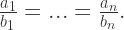
Proof.
Method (i). Construct a non-negative function f(x) with respect to variable x

Consider the equation f(x)=0, there are only two possibilities: one is the equation f(x)=0 has only one root, the other one is the function has no real roots. Therefore,

Hence, 
Moreover, if “=”, then f(x)=0 has only one root  , i.e. for all
  ,
,  . That means
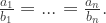
By the way, the solution of  is
is  and
and 
Method (ii). Since  , we know
 for all
Assume  , for all ,

Take the summation at the both sides,

Question 1. Assume  is a
is a  function and
  . satisfies the partial differential equation
Prove
(1)  is a function of y.
(2)  is a function of x.
(3) The solution of has the form  for some function
  and
and  .
.
Proof.
(1) Method (i) Make use of derivative.
First, we know  . Second, take the partial derivative of the function with respect to the variable x. That means,
 from the partial differential equation. Therefore, the function
  is independent of the variable x. i.e. the function is a function of variable y.
Method (ii) Make use of integration.
Since  ,
,  , then we take the integration of x at the both sides,
 , the left hand side is
  , the right hand side is
  for some function
  That means,
 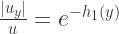 . and
. and  is a function of
  .
.
(2) is similar to (1).
(3) From part (1), we know  is a function of y. Assume
 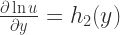 . Take the integration of y at the both sides, we have
 for some function
 for some functions and
Question 2. Assume 
 and
and  are non-negative. Find the maximum value of
  .
.
Solution.
Method (i). Langrange’s Method.

Take three partial derivatives of g,



Solve these three equations, we get  and
and  , therefore the maximum value is taken at
  and
and 
Method (ii). Change to one variable function.
Since L+K=150, we can define the one variable function

The derivative of 
The critical point is  The maximal value of g(L) is taken at
Method (iii). Mathematical Olympic Method.
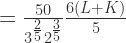
Use the fact that the geometric mean is not larger than the arithmetic mean.



 .
.
The maximum value is taken at  i.e.
i.e.
Question 3. Assume  and
and  are non-negative variables.
  . Find the maximum value of
Solution.
Method (i). Langrange’s Method

Take four partial derivatives of  the critical point is taken at
  i.e. the maximum value of f(x,y,z) is taken at
Method (ii) Math Olympic Method




The maximum value is taken at  , i.e.
Question 4. 2012 Exam MA1505 Semester 1, Question 3(a)
Assume has continuous partial derivatives of all orders, if

Find the value of the constant 
Solution.
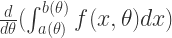
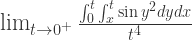
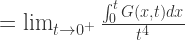
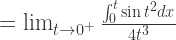
Method (i) Use derivatives.
Since  has continuous partial derivative of all orders,
Since  and
and 
we have

This implies  i.e.
i.e. 
Method (ii). Use integration.


Comparing them, we know 
 and
and  where
where  and
and  are constants.
Therefore

































![I=[-1,1].](https://s0.wp.com/latex.php?latex=I%3D%5B-1%2C1%5D.&bg=ffffff&fg=2b2b2b&s=0&c=20201002)













 , i.e.
  for all
  . The Fourier Series of
  where
where
 for all
 for all
 , then

 and
and  on
on 

 on
on  and
and  . Hence,
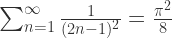

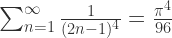
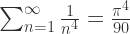
 on
on  and f(x) is a periodic function with period
  and
and  , we can prove that the Fourier series of
 , then
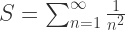 , we get
 .
. .
.
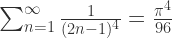 .
.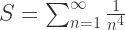 , we get
 .
. ZHANG RONG